
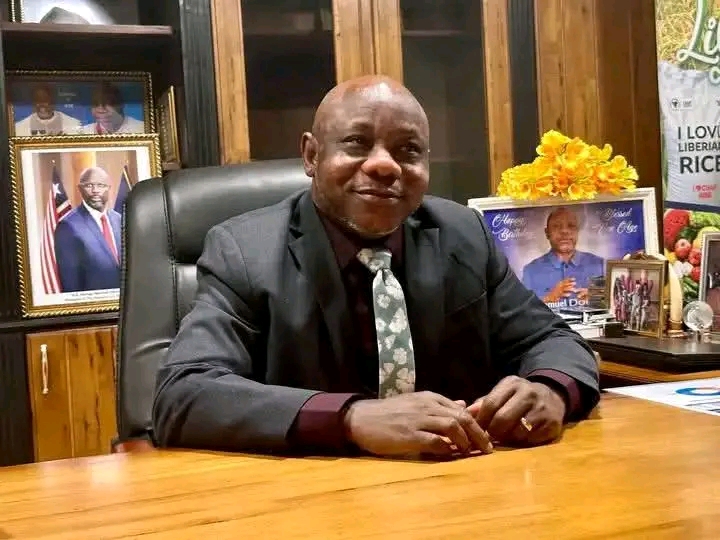
MONROVIA, Liberia — Former Finance and Development Planning Minister Samuel D. Tweah Jr. has challenged the government’s presentation of Liberia’s crossing of the US$1 billion domestic revenue mark, arguing that the achievement should not be portrayed as the accomplishment of a single administration.
Tweah said the milestone reflects the cumulative efforts of successive governments and revenue-generating institutions, rather than the performance of only the current administration.
“One government is not credited for a revenue growth. The government’s celebration is premature,” Tweah said, while arguing that Liberia’s revenue performance has been built over time through contributions made under different administrations.
According to the former finance minister, the country’s achievement should be viewed within a broader historical context, noting that previous governments also implemented measures that contributed to the expansion of domestic revenue collection.
“If former President George Weah were in power, we would have reached one billion. If Cummings were in power, we would have reached one billion as well,” Tweah asserted.
He further argued that the current US$1 billion figure cannot be exclusively attributed to the administration currently in power because the revenue base and collection mechanisms were developed and strengthened across different periods.
“This one billion is credited to everyone because we collected some and they added theirs to reach one billion,” he said.
Tweah’s comments come amid public discussion over Liberia’s reported increase in domestic revenue and what the milestone means for the country’s fiscal position. Recent reporting has described Liberia’s crossing of the US$1 billion domestic-revenue threshold as a significant development, while also raising questions about how the increased resources will translate into improved public services and living conditions.
The debate also highlights the distinction between revenue collection and government spending capacity. Higher domestic revenue can provide government with greater fiscal space, but the impact of increased collections ultimately depends on budget allocation, expenditure management, public financial controls and the effectiveness of government programs.
Tweah’s remarks therefore shift the focus from simply celebrating the revenue figure to examining how much each administration contributed to the systems, policies and economic conditions that made the milestone possible.
His comments also revive the broader political debate over Liberia’s fiscal performance under successive administrations, particularly whether revenue growth should be measured as the achievement of a particular government or as the cumulative result of reforms and collection efforts carried out over several years.
The US$1 billion milestone comes against the backdrop of Liberia’s expanding national budget. Reporting on the FY2026 budget indicated domestic revenue projections of about US$1.13 billion, alongside external resources, bringing total projected financing to approximately US$1.2 billion.
While the revenue milestone represents a significant increase in the resources available to the state, the former minister’s argument underscores an important question: who should receive credit for the growth, and how should the public assess the contribution of successive administrations to Liberia’s revenue system?
Tweah maintains that the answer should not be limited to one government, insisting that the billion-dollar threshold represents an accumulation of efforts made across different political administrations.
