
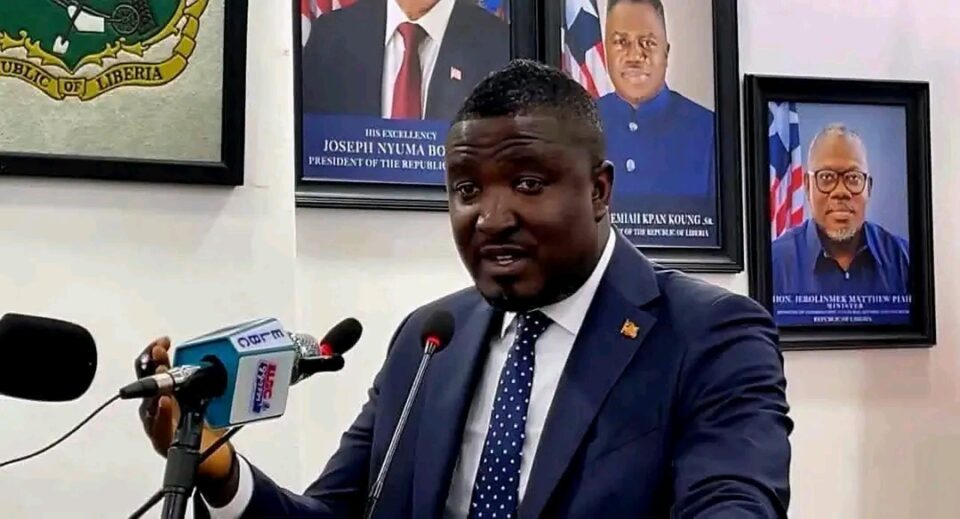
MONROVIA, Liberia — Deputy Information Minister Daniel O. Sando says the administration of President Joseph Nyuma Boakai is prioritizing road connectivity and infrastructure development, citing the deployment of earthmoving equipment across Liberia’s 15 counties as part of efforts to advance development nationwide.
Speaking on the Prime Morning Drive on Wednesday, Sando said the government remains focused on implementing its development priorities rather than being distracted by criticism from opposition groups.
According to the Deputy Information Minister, the administration’s attention is directed toward initiatives intended to improve the country’s infrastructure and address longstanding development challenges affecting communities across Liberia.
The deployment of earthmoving equipment across the 15 counties is significant to the government’s stated infrastructure priorities, particularly in a country where poor road conditions continue to affect transportation, commercial activities, and access to essential public services in many rural communities.
Road infrastructure remains a major concern for residents, farmers, traders, students, and health workers, especially in areas where deteriorating roads become difficult to navigate during the rainy season. In some communities, inadequate road connectivity increases transportation costs, delays the movement of agricultural products to markets, and makes access to hospitals, schools, and government services more challenging.
The use of earthmoving equipment can support road rehabilitation, drainage improvement, the clearing of road corridors, and other preparatory works necessary for maintaining and improving road networks. When properly deployed and maintained, such equipment can also help local authorities respond to road deterioration and improve access to remote communities.
For Liberia, improved road connectivity is essential to strengthening economic activities beyond Monrovia. Better feeder roads can help farmers transport produce to commercial centers, enable businesses to move goods more efficiently, and improve connections between county capitals, districts, and smaller communities.
Infrastructure development also extends beyond road construction and rehabilitation. Effective drainage systems, properly maintained bridges, culverts, and other supporting structures are necessary to protect roads from flooding, erosion, and damage during heavy rainfall.
However, the impact of the nationwide equipment deployment will depend on how effectively the machinery is distributed, the availability of fuel and maintenance services, the technical capacity of operators, and the implementation of a clear roadwork schedule. Public reporting on the locations, operational status, and completed works would also help citizens assess the progress of the initiative.
Speaking during the broadcast, Sando maintained that the Boakai administration is concentrating on national development, arguing that the government should direct its energy toward activities that contribute to the country’s progress rather than political exchanges with the opposition.
His remarks reflect the administration’s position that development priorities should remain central to its work. At the same time, public scrutiny of infrastructure projects remains important in ensuring transparency, accountability, and the effective use of public resources.
As the government advances its infrastructure agenda, the central measure of success will be whether the deployment of earthmoving equipment translates into visible improvements in road conditions, reliable access to communities, reduced transportation difficulties, and expanded economic opportunities for citizens across all 15 counties.
For residents in rural and underserved areas, the practical results will be particularly important, as improved roads can influence access to essential services, agricultural markets, employment opportunities, and broader economic participation.
