
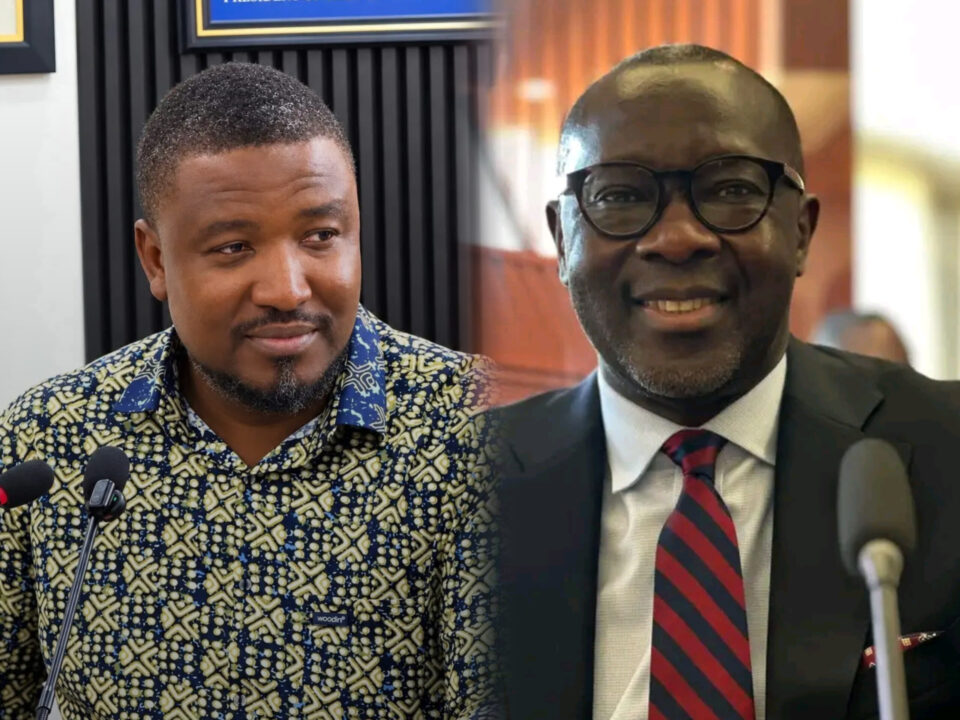
MONROVIA, Liberia — Deputy Information Minister Daniel O. Sando has criticized a Gbarpolu County senator over remarks about Liberia’s economic hardship, using political satire to question the senator’s record as a former finance minister and the accountability of officials who have previously held positions of public trust.
In a commentary titled “The Senator from Gbarpolu and the Missing Government Money: Listening to the Villagers in Gbarpolu County,” Sando uses fictional conversations among residents to challenge what he portrays as a contradiction between politicians’ criticism of national problems and their performance while in government.
The commentary raises questions about the responsibility of former public officials to account for their records, particularly when they speak about economic conditions they previously had an opportunity to influence.
Poverty and the burden of leadership
Sando begins with an imagined scene in Bopolu, where an elderly resident listens to a senator lamenting the rising cost of living, high taxes and children selling goods in the streets.
Surprised by the remarks, the resident contacts his brother in Gbarma and recalls that the senator previously served as finance minister for four years.
Their fictional exchange questions why a former official who once had responsibility for overseeing the country’s finances is now highlighting economic difficulties that continue to affect ordinary Liberians.
Through the satire, Sando challenges political leaders to go beyond identifying national problems and explain what they did, while in office, to address them.
Gbarpolu’s natural wealth and persistent hardship
Sando also draws attention to Gbarpolu County’s mineral and forestry resources, including gold, diamonds and timber, contrasting their potential economic value with the poverty experienced by some residents.
In another imagined exchange, a cassava seller in Bokomu questions why communities endowed with natural resources continue to face economic hardship while children remain engaged in street trading.
The scenario raises broader questions about the management of Liberia’s natural resources, the distribution of benefits from their exploitation and whether resource-rich communities are receiving meaningful economic and social returns.
However, Sando’s commentary does not present financial records or documentary evidence establishing that funds intended for Gbarpolu County are missing or have been mismanaged. The allegations implied in the title therefore remain unsubstantiated within the commentary and should not be treated as established facts.
Questions about the former minister’s record
The commentary challenges the former finance minister to explain the measures pursued during his tenure to address poverty and the extent to which government resources were used to improve the living conditions of ordinary citizens.
Through the voice of an imagined village resident, Sando raises three central questions: What resources were available to the government during the former minister’s tenure? What became of those resources? And why do many Liberians continue to experience hardship despite the country’s natural wealth?
The questions underscore the commentary’s central argument that public officials should be judged not only by their ability to describe national challenges but also by their decisions, policies and measurable achievements while in office.
Sando further proposes a fictional “Ministry of Finance History and Poverty Explanation,” using the imaginary institution to ridicule politicians whom he portrays as spending more time explaining the country’s difficulties than demonstrating solutions.
‘Sophisticated problem explainers’
The expression “sophisticated problem explainers” summarizes the central message of Sando’s commentary.
“Some people are sophisticated problem explainers,” he writes, criticizing what he considers a tendency among some public figures to repeatedly describe national problems without adequately demonstrating how they used their positions to address them.
His argument shifts attention from political rhetoric to performance, emphasizing that leadership should be assessed by the results achieved and the extent to which public policies improve citizens’ lives.
For Liberians facing high living costs, limited employment opportunities and persistent poverty, the broader issue remains whether those entrusted with public resources and policymaking authority can demonstrate tangible progress.
Although presented through humor and fictional conversations, Sando’s commentary raises a serious question about political accountability: should former public officials be expected to explain their own records when they criticize conditions that persist under successive administrations?
As of this time, Senator Konneh has not yet responded to the allegations raised by Minister Daniel O. Sando
