
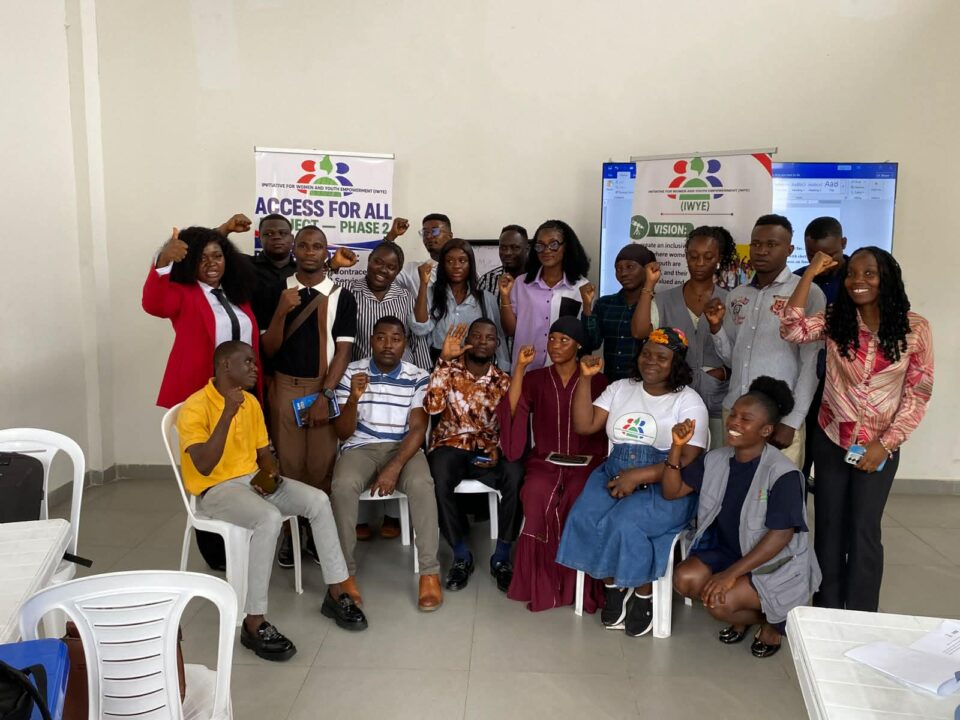
MONROVIA, Liberia – The Initiative for Women and Youth Empowerment (IWYE) has intensified efforts to promote informed public discourse on reproductive health by training journalists and media practitioners on family planning, contraception, and Sexual and Reproductive Health and Rights (SRHR), emphasizing the media’s critical role in advancing accurate, ethical, and evidence-based reporting.
The training, held under the ACCESS FOR ALL Project – Phase 2, brought together journalists from various media institutions to strengthen their knowledge of family planning issues and equip them with the skills needed to produce balanced, factual, and impactful reports that can help combat misinformation and increase public awareness.
Delivering the keynote address, IWYE Founder and Executive Director Musu Davis said the media remains one of the most powerful tools for influencing public understanding and shaping national conversations on reproductive health.
She stressed that access to reliable information is fundamental to enabling women, girls, and young people to make informed decisions about their sexual and reproductive health and rights.
“The media has the power to educate, inspire change, challenge harmful myths, and amplify the voices of those whose reproductive health needs often go unheard,” Davis said.
She described IWYE as a women- and youth-led organization committed to empowering vulnerable populations through advocacy, capacity building, community engagement, and strategic partnerships that promote equal opportunities and protect the rights of women and young people.
According to Davis, the ACCESS FOR ALL Project – Phase 2 seeks to expand access to affordable, quality contraceptive services while strengthening advocacy efforts to support Liberia’s commitments under the FP2030 global family planning agenda.
She emphasized that investing in family planning and reproductive health is not only a health priority but also a national development imperative that contributes to improved maternal health, reduced unintended pregnancies, stronger families, and sustainable economic growth.
Davis further called on the Government of Liberia to increase domestic financing for family planning through the Ministry of Health budget, improve the availability of quality contraceptive services nationwide, and ensure equitable access to sexual and reproductive health services, particularly for women, girls, and underserved communities.
Highlighting the project’s guiding principles—Access, Equity, Health, Rights, and Empowerment—she said IWYE envisions a Liberia where every woman, girl, and young person can obtain accurate reproductive health information and quality services free from discrimination, stigma, or unnecessary barriers.
She urged journalists to move beyond simply reporting events and instead become advocates for factual information by producing stories that educate the public, promote accountability, and encourage evidence-based discussions on reproductive health.
“Your reports can help save lives, influence policies, and empower communities with the knowledge they need to make informed choices,” Davis told participants.
The training also featured technical presentations on strategic messaging, responsible reporting on reproductive health issues, and the safe and informed use of contraceptives. Participants engaged in discussions on addressing myths and misconceptions surrounding family planning while promoting accurate public education through the media.
The workshop forms part of IWYE’s broader advocacy campaign under the ACCESS FOR ALL Project to strengthen public engagement, encourage policy support, and expand access to quality family planning and reproductive health services across Liberia.
