
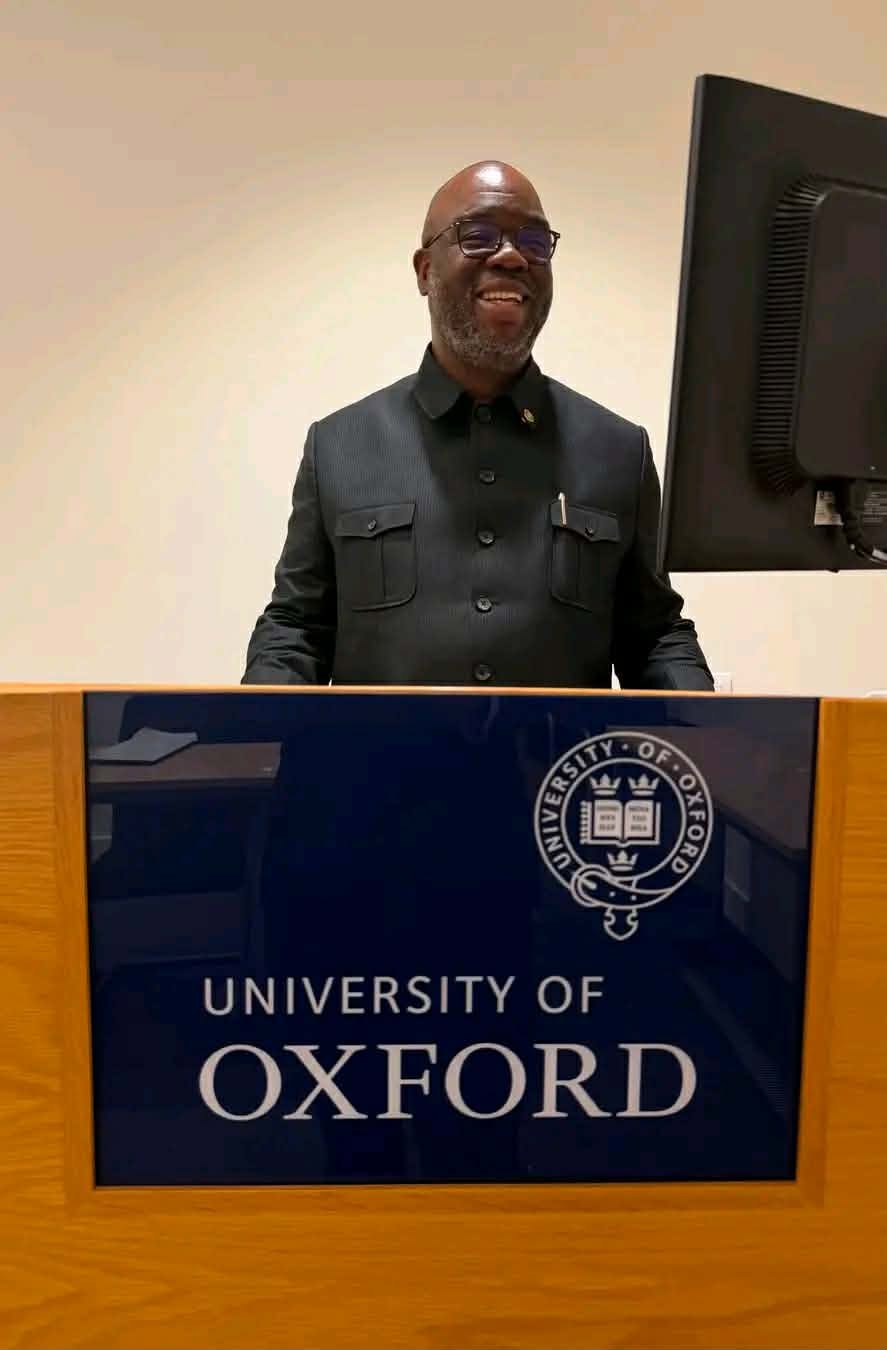
Oxford, United Kingdom – Bomi County Senator Edwin Melvin Snowe Jr., one of Liberia’s most experienced legislators and a leading figure in regional parliamentary diplomacy, has reaffirmed the importance of constitutional governance, democratic institutions, and regional cooperation during a high-level engagement at Green Templeton College, University of Oxford.
Senator Snowe delivered a presentation on “Strengthening Regional Democracy: The ECOWAS Parliament and the Future of Constitutional Governance in West Africa,” where he shared insights from years of legislative and diplomatic experience within both Liberia and the Economic Community of West African States (ECOWAS).
The event brought together members of the Oxford academic community, policymakers, and scholars interested in democratic governance and regional integration. Snowe expressed appreciation to Mr. Wantoe Teah Wantoe and the Oxford community for the warm reception and the opportunity to contribute to discussions on one of the most pressing issues confronting West Africa.
In his address, the Liberian senator emphasized that democracy cannot be sustained by constitutions alone. He argued that lasting democratic governance depends on strong and independent institutions, principled leadership, respect for the rule of law, and citizens who remain committed to defending democratic values.
Drawing on his experience in regional parliamentary diplomacy, Snowe noted that he has led and participated in numerous ECOWAS parliamentary missions across several West African countries. Those assignments have involved observing elections, engaging political stakeholders, promoting dialogue during periods of political uncertainty, and supporting efforts aimed at preserving constitutional order and peace within the sub-region.
Senator Snowe currently serves as a Liberian representative to the ECOWAS Parliament, where he has been actively involved in advancing regional integration, democratic governance, peacebuilding, and legislative cooperation among ECOWAS member states. Through the regional parliament, he has participated in discussions and initiatives focused on electoral integrity, human rights, security, economic development, and strengthening democratic institutions across West Africa.
His appearance at Oxford reflects a political career that spans more than two decades. Snowe first rose to national prominence as a member of Liberia’s House of Representatives, where he represented Bomi County and later served as Speaker of the House of Representatives, becoming one of the country’s youngest lawmakers to occupy the position. Throughout his legislative career, he has remained an influential voice on governance reforms, national reconciliation, decentralization, regional cooperation, and Liberia’s engagement with international partners.
Following his election to the Liberian Senate, Snowe has continued to play a prominent role in national policymaking while representing Liberia on regional and international parliamentary platforms. His work at both the national and ECOWAS levels has positioned him among Liberia’s leading advocates for democratic governance and constitutionalism.
Reflecting on his visit to Oxford, Senator Snowe described the university as a place where ideas influence institutions and where dialogue has historically shaped public policy and global leadership. He said contributing to such conversations was both an honor and a profound responsibility.
“I am deeply grateful for your hospitality, your intellectual curiosity, and your commitment to building bridges across nations and generations,” Snowe said. “I leave Oxford encouraged by the conviction that, through partnership, informed dialogue, and principled leadership, we can strengthen democratic institutions and advance peace, constitutional governance, and shared prosperity for the benefit of our people and our region.”
His remarks come at a time when several West African nations continue to confront constitutional and democratic challenges, underscoring the growing importance of the ECOWAS Parliament and regional institutions in promoting stability, peaceful political transitions, and democratic accountability across the sub-region.
