
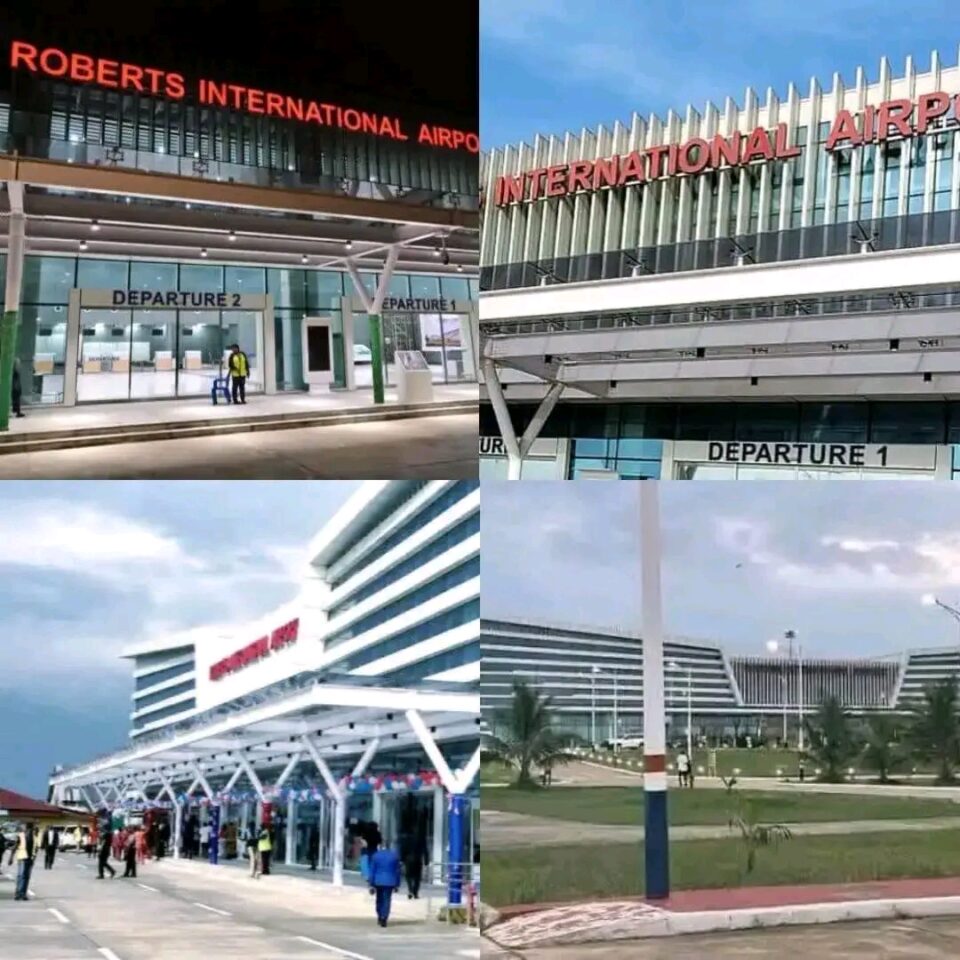
MONROVIA, Liberia – The Liberian government has officially launched a competitive bidding process to identify a private investor to finance, modernize, operate, and maintain Roberts International Airport (RIA) under a 25-year concession agreement aimed at improving the country’s aviation infrastructure.
The announcement was made by Deputy Minister for Information Daniel O. Sando during the Ministry of Information’s regular press briefing on Thursday, August 6, 2026, in Monrovia.
Under the proposed agreement, the Government of Liberia will retain ownership of Roberts International Airport, while the selected concessionaire will be responsible for investing in major infrastructure upgrades, managing airport operations, and enhancing passenger and cargo services throughout the concession period.
According to the government, the initiative is intended to attract private sector investment, improve operational efficiency at the country’s principal international airport, strengthen Liberia’s aviation industry, and stimulate economic growth through improved transportation infrastructure.
The government has set November 2, 2026, as the deadline for interested investors to submit their bids. Upon the expiration of the 25-year concession, Roberts International Airport, along with all agreed infrastructure improvements, will be transferred back to the Government of Liberia in accordance with the terms of the concession agreement.
Will the Roberts International Airport Concession Repeat the APM Terminals Experience?
The Liberian government’s decision to concession Roberts International Airport (RIA) to a private investor for 25 years has generated mixed reactions, with many Liberians drawing comparisons to the concession agreement between the National Port Authority (NPA) and APM Terminals.
The government says the airport concession is intended to attract private investment, modernize airport infrastructure, improve passenger and cargo services, and strengthen Liberia’s aviation sector while retaining ownership of the airport. Under the proposed arrangement, the successful investor will finance, operate, and maintain RIA for 25 years before transferring it back to the Government of Liberia.
While these objectives appear positive, many citizens are asking whether the agreement could mirror the experience at the Freeport of Monrovia.
When APM Terminals assumed operations of the Freeport, the company invested heavily in rehabilitating and modernizing port facilities. However, over the years, importers, business owners, and consumers have consistently complained that port handling charges and other service fees remain among the highest in the region. Those costs are often passed on to consumers, contributing to the high prices of imported goods in Liberia.
Although APM Terminals has maintained that its tariffs are approved by the government and are necessary to recover investment costs and maintain international standards, the perception among many Liberians is that the concession has increased the cost of doing business at the country’s main seaport.
That experience has led many to question whether the proposed RIA concession could result in higher airport service charges, increased passenger fees, and more expensive cargo handling costs. If the concession agreement does not include strong regulatory oversight and clear limits on tariff increases, airlines, businesses, and travelers could ultimately bear higher operational costs, which may be passed on to consumers.
On the other hand, if the government negotiates a transparent agreement with effective safeguards, performance benchmarks, and reasonable pricing controls, Liberia could benefit from a modern international airport while protecting the interests of the public.
Ultimately, the debate is not about whether private investment is good or bad. Rather, it is about ensuring that any concession agreement balances investor returns with affordability, transparency, and the long-term interests of the Liberian people. The lessons learned from the APM Terminals concession should serve as an important reference point as the government moves forward with plans for Roberts International Airport.
