
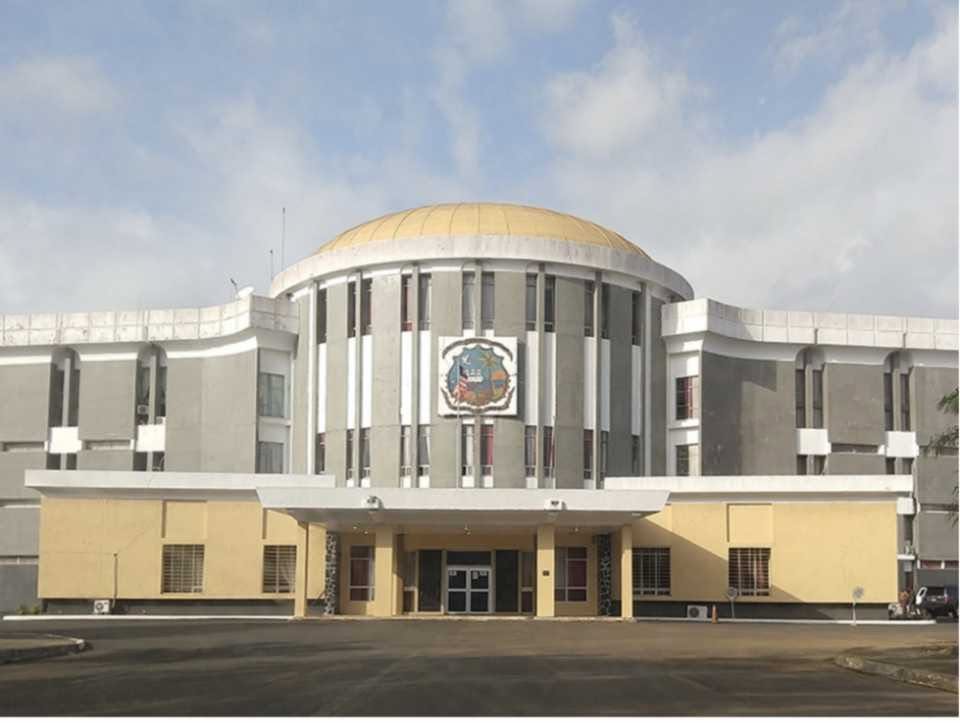
Capitol Hill, Liberia — The House of Representatives has approved a contentious resolution seeking to increase Liberia’s electoral districts from 73 to 89, a move that could significantly reshape the country’s political representation ahead of the next general elections.
The resolution, submitted by the House Committee on Elections and Inauguration, has been forwarded to the Senate for concurrence. It is based on the certified results of the 2022 National Population and Housing Census and proposes a new population-based formula for determining electoral representation in accordance with Articles 39, 80(d), and 80(e) of the 1986 Constitution.
Presenting the committee’s report, lawmakers argued that the certification of the 2022 census imposes a constitutional obligation on the Legislature to establish a new population threshold that will guide the National Elections Commission (NEC) in reapportioning electoral districts before the country’s next general elections.
Under the proposal, Montserrado County would increase from 17 to 20 electoral districts, Nimba County from nine to 11, Bong County from seven to nine, and Lofa County from five to seven. Grand Bassa, Margibi, Bomi, Grand Cape Mount, Grand Gedeh, Maryland, and Sinoe counties would each receive one additional district.
Meanwhile, River Gee, Gbarpolu, Grand Kru, and River Cess would retain their current number of electoral districts under the proposed reapportionment.
During deliberations, the House Committee on Elections and Inauguration informed plenary that the resolution had been endorsed by 50 lawmakers. However, Grand Gedeh County District #3 Representative Jacob C. Debee II questioned the claim and requested that the names of those who signed the resolution be disclosed before any vote was taken.
Despite the objection, Representative Ivar K. Jones moved for the adoption of the committee’s report and the passage of the resolution. The motion was seconded and approved by plenary, paving the way for the measure to be transmitted to the Liberian Senate for consideration.
Should the Senate concur, the National Elections Commission will be mandated to redraw constituency boundaries using the certified 2022 census figures, resulting in Liberia’s most significant electoral reapportionment in more than a decade.
The House of Representatives is the lower chamber of Liberia’s bicameral Legislature, established under the 1986 Constitution, which came into force on January 6, 1986. Together with the Senate, it is responsible for making laws, approving the national budget, exercising oversight over the Executive Branch, and representing citizens from electoral districts across Liberia’s 15 counties.
Liberia’s current electoral district system traces its origins to the country’s return to constitutional democracy in 1985, when 64 electoral districts were established for the first elections held under the framework of the new constitutional order. The 1986 Constitution further requires that electoral constituencies be reviewed after every national population census to ensure fair and equitable representation based on population changes.
Following the 2008 National Population and Housing Census, the National Elections Commission carried out a nationwide reapportionment that increased the number of electoral districts from 64 to 73 ahead of the 2011 General and Presidential Elections.
If the current proposal is approved by the Senate and subsequently implemented by the NEC, Liberia will expand its electoral districts from 73 to 89—an addition of 16 new constituencies. The proposed increase would represent the largest adjustment to the country’s electoral map since the 2011 reapportionment and could significantly influence legislative representation and political competition in future elections.
Liberia’s bicameral Legislature, established under the 1986 Constitution, which came into force on January 6, 1986. Together with the Senate, it is responsible for making laws, approving the national budget, exercising oversight over the Executive Branch, and representing citizens from electoral districts across Liberia’s 15 counties.
Liberia’s current electoral district system traces its origins to the country’s return to constitutional democracy in 1985, when 64 electoral districts were established for the first elections held under the framework of the new constitutional order. The 1986 Constitution further requires that electoral constituencies be reviewed after every national population census to ensure fair and equitable representation based on population changes.
Following the 2008 National Population and Housing Census, the National Elections Commission carried out a nationwide reapportionment that increased the number of electoral districts from 64 to 73 ahead of the 2011 General and Presidential Elections.
If the current proposal is approved by the Senate and subsequently implemented by the NEC, Liberia will expand its electoral districts from 73 to 89—an addition of 16 new constituencies. The proposed increase would represent the largest adjustment to the country’s electoral map since the 2011 reapportionment and could significantly influence legislative representation and political competition in future elections.
