
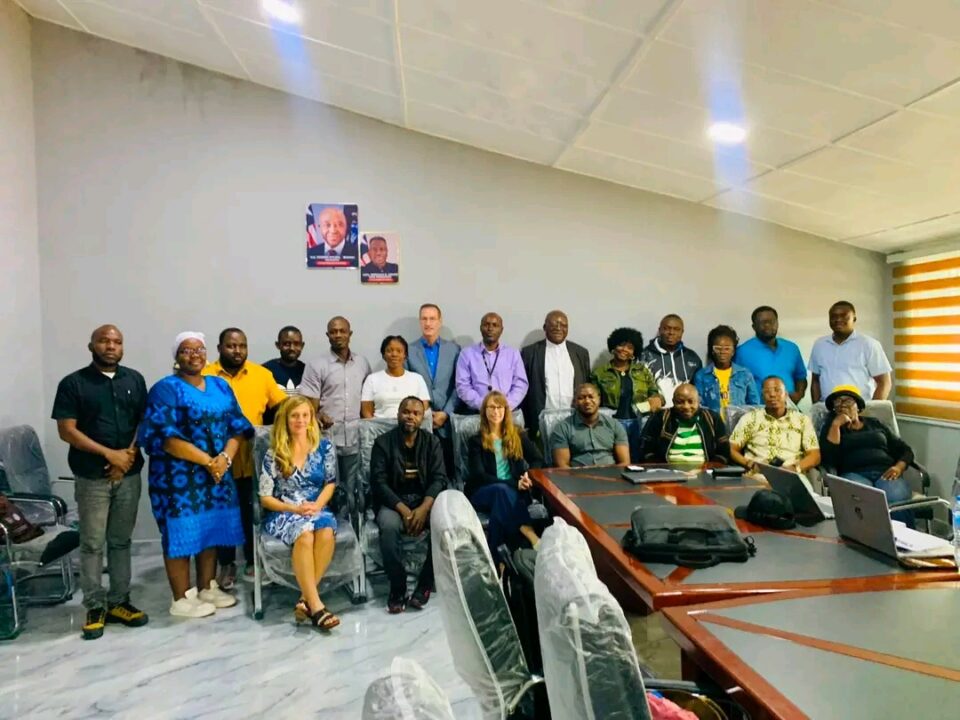
Monrovia, Liberia – The Millennium Challenge Corporation (MCC) Compact Development Team (CDT) has continued its stakeholder consultations with a strategic engagement involving the Agricultural and Industrial Training Bureau (AITB) to gather technical information on Liberia’s Technical and Vocational Education and Training (TVET) system, with particular emphasis on workforce development for the electricity sector.
The consultation is part of the Compact Development Team’s broader effort to assess the institutional, regulatory, and workforce development landscape that supports Liberia’s electricity sector. The information gathered will help inform the design of investments and reforms that promote a skilled workforce capable of meeting the country’s growing infrastructure and energy needs.
During the meeting, representatives from the CDT and AITB discussed the policy and regulatory framework governing TVET in Liberia, including occupational standards, curriculum development, accreditation of training providers, competency-based training, certification processes, quality assurance mechanisms, and the alignment of technical education with industry demand. Participants also examined the skills required within the electricity sector and the importance of ensuring that training programs are responsive to labor market needs.
AITB provided an overview of its mandate as the national institution responsible for regulating, coordinating, and promoting Technical and Vocational Education and Training in Liberia. The Bureau plays a central role in developing occupational standards, accrediting TVET institutions and programs, conducting trade testing and competency assessments, certifying skilled workers, and promoting industry-driven training that equips graduates with practical and marketable skills.
The Bureau also highlighted ongoing initiatives aimed at strengthening the quality and relevance of technical education across the country. These efforts include enhancing competency-based training systems, improving quality assurance and monitoring, fostering stronger partnerships with industry, expanding access to technical skills development, and ensuring that graduates possess the competencies required to secure meaningful employment and contribute to national development.
The engagement further explored opportunities for collaboration between the Compact Development Team and AITB to support workforce development in the electricity sector. Discussions emphasized the importance of developing a pipeline of qualified technicians, electricians, and other skilled professionals who can support the expansion, operation, and maintenance of Liberia’s power infrastructure while meeting internationally recognized standards.
As the Compact Development Team advances the development of the Liberia Compact, consultations with institutions such as AITB remain essential to ensuring that proposed investments are informed by national priorities, stakeholder expertise, and evidence-based analysis. Insights generated through these engagements will contribute to shaping interventions that strengthen technical skills development, improve workforce readiness, and support the long-term sustainability of the electricity sector.
The meeting reaffirmed the shared commitment of the MCC Compact Development Team and the Agricultural and Industrial Training Bureau to advancing a modern, demand-driven TVET system that equips Liberians with the knowledge, technical expertise, and professional competencies needed to drive economic growth, improve livelihoods, and support the country’s sustainable development agenda.
Building a skilled workforce for Liberia’s economic transformation.
