
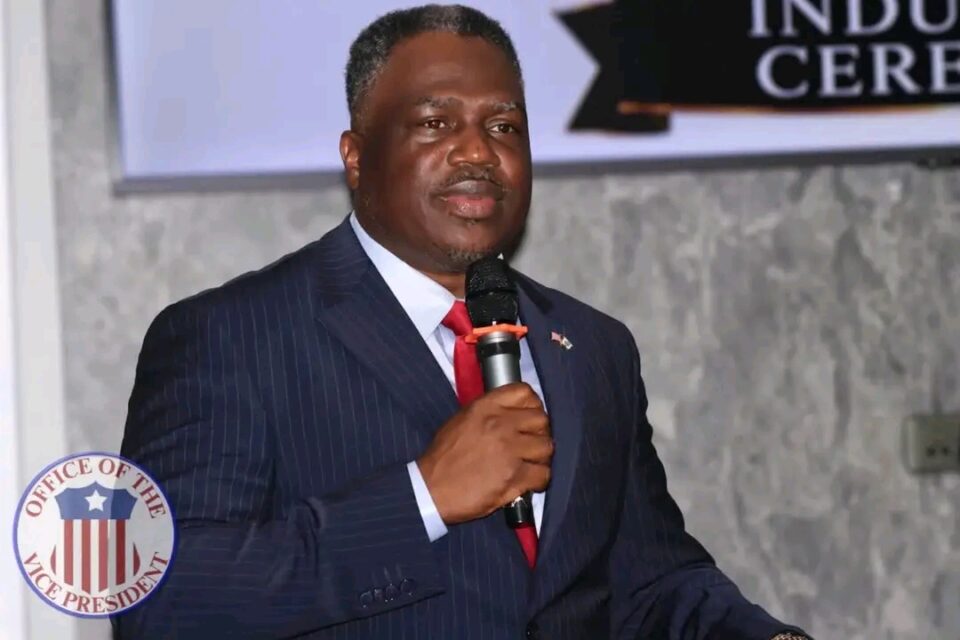
ACCRA, Ghana — Liberia’s Vice President Jeremiah Kpan Koung has called on African governments to renegotiate the continent’s approach to mineral development, warning that exporting raw resources without building local industries continues to deny African countries jobs, technology, and substantial economic returns.
Koung made the call while representing President Joseph Nyuma Boakai at a high-level mineral policy forum in Accra, where he urged African leaders to strengthen cooperation, protect national economic interests, and ensure that mineral extraction translates into tangible improvements in citizens’ lives.
He argued that despite rising international demand for minerals essential to manufacturing, digital technology, and the global energy transition, many African countries continue to capture only a limited share of the wealth generated from their natural resources.
The Vice President said the continent must move beyond exporting unprocessed minerals and prioritize domestic processing, manufacturing, skills development, and industrial expansion.
He cautioned that attracting foreign investment should not come at the expense of national interests, insisting that governments must protect public revenues, mining communities, and environmental standards while maintaining an investment climate that supports responsible business.
African countries, he said, need a coordinated approach to mineral governance that establishes common standards and prevents governments from undermining one another through unfavorable investment concessions.
Koung identified the Africa Mining Vision as an important framework for linking mineral extraction to broader economic sectors, including agriculture, energy, transportation, technology, and manufacturing.
He outlined several priorities for reform, including the development of regional mineral value chains, stronger geological institutions, improved benefits for mining communities, formal support for artisanal miners, and more balanced partnerships with international investors.
Regional Cooperation and Local Industries
Koung emphasized that individual African countries may struggle to establish competitive mineral-processing industries without adequate infrastructure and access to larger markets.
He called for regional investment in reliable electricity, transportation systems, processing facilities, and trade networks, noting that the African Continental Free Trade Area offers an opportunity to combine national resources and expertise to support industrial growth.
He also stressed the importance of improving geological surveys, laboratory facilities, licensing procedures, and revenue-management systems to help governments better understand the value of their mineral deposits before negotiating agreements with foreign companies.
According to Koung, closer cooperation on taxation, local content requirements, beneficial ownership disclosure, and mineral reporting would improve transparency and strengthen Africa’s negotiating position.
He further insisted that the success of mining operations should not be judged solely by production figures or export earnings. Instead, governments should consider the jobs created, skills transferred, local businesses supported, and industries established through investment agreements.
Mining Communities Must Benefit
Addressing the impact of mining on local populations, Koung called for fair compensation, employment opportunities, support for domestic businesses, environmental safeguards, and improved access to essential public services.
He said mining companies and governments must plan for mine closures from the beginning of operations, including financing measures to restore livelihoods and develop alternative economic opportunities for affected communities.
The Vice President also advocated greater support for artisanal and small-scale miners through accessible licensing, technical training, safer working conditions, financing, and legitimate markets.
At the same time, he called for stronger measures against mineral smuggling, child labor, and criminal exploitation within the sector.
Liberia Seeks Greater Returns From Mineral Resources
Turning to Liberia, Koung reaffirmed the Boakai administration’s intention to use the country’s mineral resources to support economic diversification, infrastructure development, and improved public services under the ARREST Agenda for Inclusive Development.
He identified better geological data, modern mineral licensing and cadastre systems, transparent revenue collection, increased local procurement, and domestic processing as key areas requiring attention.
Koung also highlighted the need to improve safety in artisanal mining, strengthen environmental oversight, and establish sustainable livelihood programs for communities dependent on mining activities.
He warned that communities should not be left without economic opportunities once mineral deposits are depleted, arguing that governments and mining companies must invest in alternative sources of income while mining operations are still generating revenue.
Liberia, he said, is willing to work with neighboring countries through the Mano River Union, the Economic Community of West African States, and other continental institutions to advance shared infrastructure projects, harmonize relevant policies, and expand regional industrial development.
Koung Proposes Regional Action Plan
To translate the discussions in Accra into practical outcomes, Koung proposed a common mineral policy agreement and a regional roadmap identifying priority projects for mineral processing and value addition.
He also called for coordinated efforts to improve geological information-sharing, strengthen local content policies, facilitate technology transfer, and mobilize financing for projects seeking investment.
Additional proposals included stronger collaboration against illicit mineral trading and illegal financial flows, as well as an annual ministerial review to measure progress and hold institutions accountable.
Koung suggested that the review should be supported by a transparent performance-tracking system covering investment, project development, local procurement, workforce training, and the impact of mining on communities.
He said such a mechanism would help governments identify implementation gaps, address delays, and ensure that commitments made by participating countries produce measurable results.
Calls for Accountability and Fair Partnerships
Koung urged African governments to engage international investors on the basis of transparency, fairness, and mutual respect, warning that the continent’s mineral resources should not become instruments of geopolitical competition at the expense of African development.
He pointed to the Africa Minerals Strategy Group, the African Union, the African Minerals Development Center, and regional organizations as important partners in coordinating policies, sharing technical expertise, and monitoring implementation.
The Vice President stressed that the Accra forum must deliver more than statements of intent, urging participating countries to agree on specific projects, clear standards, and measurable targets.
He said Africa’s mineral resources represent a responsibility to both present and future generations, adding that their true value should be reflected in improved livelihoods, stronger institutions, and sustainable economic opportunities.
Representing President Boakai, Koung reiterated Liberia’s commitment to responsible mineral investment and regional cooperation, calling on African leaders to turn the continent’s resource potential into long-term economic gains for its people.
