
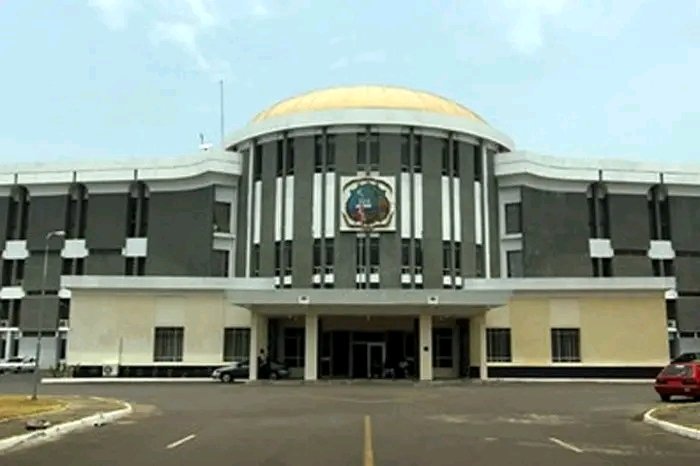
Capitol Hill, Liberia — The Liberian Legislature is moving toward a critical examination of two proposed judicial institutions intended to confront the country’s troubled history of wartime atrocities and persistent concerns over corruption and economic crimes, with a joint public hearing scheduled for Wednesday, November 25, 2026.
The Senate and House of Representatives will convene the hearing at 12:00 noon in the Chambers of the Liberian Senate at the Capitol Building to deliberate on the revised and harmonized Bill to Establish a Special War Crimes Court and the proposed Bill to Establish a Special Economic and Corruption Crimes Court, also known as the National Anti-Corruption Court.
The exercise, being coordinated through the respective Committees on Judiciary and other relevant legislative committees, is intended to provide a platform for public scrutiny, expert assessment, and institutional contributions before lawmakers advance consideration of the proposed measures.
The two bills address separate but closely related questions of national accountability. One seeks to establish a judicial mechanism for prosecuting individuals accused of grave violations committed during Liberia’s civil conflicts, while the other proposes a specialized court to handle serious economic and corruption-related offenses.
The planned hearing follows the publication of a transitional justice roadmap on June 16, 2026, and consultations conducted at the Senate between June 24 and July 1. Those engagements brought together government institutions, legal professionals, religious organizations, human rights advocates, and civil society groups to examine the proposed framework for accountability.
Among the institutions involved in the consultations were the Ministry of Justice, Liberia National Bar Association, Liberia Council of Churches, Liberia Muslim Council, Office of War and Economic Crimes Court, Independent National Commission on Human Rights, Liberia Anti-Corruption Commission, Federation of Liberian Youth, and the Center for Transparency and Accountability in Liberia, alongside civil society organizations advocating for war crimes accountability.
The Joint Committee also received recommendations from senior Liberian constitutional lawyers and international legal experts, whose contributions were intended to help assess the legal foundation, institutional structure, and practical implications of the proposed courts.
As part of the next phase of the process, representatives of 18 institutions and organizations have been formally invited to present their positions and participate in an interactive exchange with lawmakers during Wednesday’s proceedings.
The committee is urging government agencies, civil society organizations, human rights defenders, members of the legal community, international partners, and the general public to attend and offer substantive recommendations on the proposed legislation.
Particular attention is expected to focus on ensuring that the proposed judicial institutions are consistent with Liberia’s Constitution, existing statutory provisions, and established principles of due process and fair trial. Public contributions are also expected to help lawmakers identify legal and institutional challenges that could affect the effective implementation of the proposed courts.
The debate carries considerable national significance, particularly for a country that continues to grapple with demands for justice over atrocities committed during its civil wars, as well as public concerns about the misuse of state resources and the prosecution of corruption cases.
For victims and families seeking accountability, the proposed War Crimes Court represents a legislative effort to address longstanding demands for justice. Meanwhile, the proposed Economic and Corruption Crimes Court is intended to strengthen the country’s capacity to pursue serious financial misconduct through a specialized judicial process.
Although Wednesday’s hearing will not, in itself, establish either court, it marks another important stage in the legislative consideration of the two proposals.
The extent to which lawmakers incorporate public recommendations, address constitutional questions, and establish workable judicial safeguards could ultimately determine the strength and credibility of the proposed institutions.
With the hearing approaching, attention is turning to whether Liberia’s lawmakers can translate years of public demands for accountability into a legal framework capable of addressing past atrocities and confronting economic crimes through credible judicial processes.
