
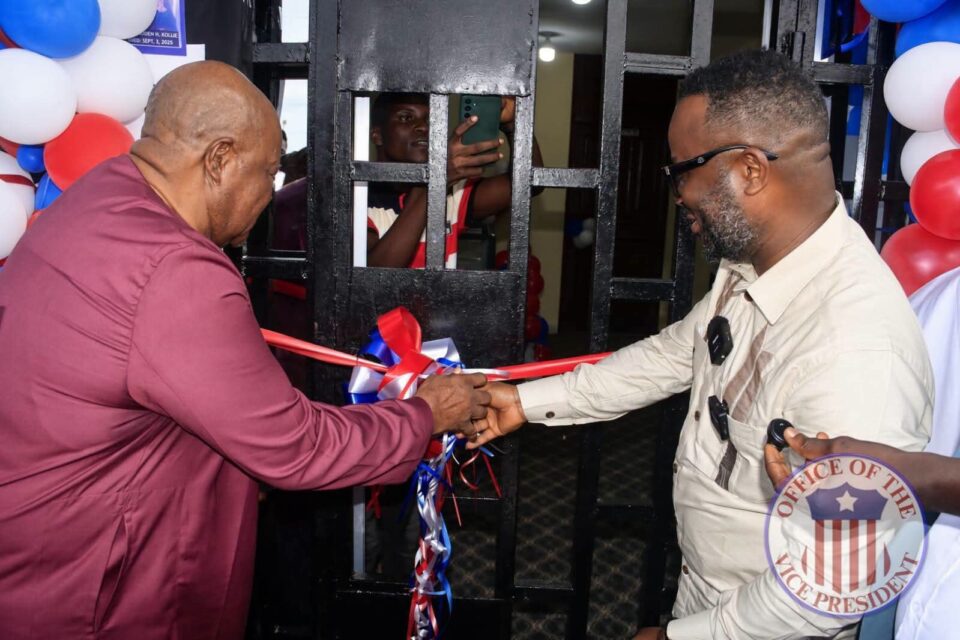
PAYNESVILLE, Liberia — Liberia’s technical and vocational education system needs stronger links to the labor market if young people are to acquire skills that translate into jobs and viable businesses, Vice President Jeremiah Kpan Koung and Agricultural and Industrial Training Bureau (AITB) Director General Abraham Billy have said.
The two officials made the call Wednesday at the dedication of AITB’s renovated headquarters at the Monrovia Vocational Training Center (MVTC) Compound in Paynesville, where they stressed the need to make skills training more responsive to the demands of Liberia’s growing economy.
Representing Vice President Koung at the ceremony, Deputy Chief of Staff for Administration Dr. Macdonald M. Metzger said the rehabilitation of the facility demonstrates the government’s effort to strengthen human capital as a central component of its development program under the ARREST Agenda for Inclusive Development.
Koung said Liberia’s development cannot be measured only by the construction of roads, bridges, power infrastructure and other physical projects.
He argued that infrastructure must be matched by a workforce capable of operating, maintaining and expanding those investments, particularly as the country seeks to increase economic activity and attract new opportunities.
The Vice President pointed to agriculture, manufacturing, construction and energy as sectors where Liberia requires competent technicians and skilled workers, including mechanics, electricians, welders and heavy-equipment operators.
He challenged AITB and other institutions responsible for technical education to move beyond an emphasis on enrollment figures and certificates and instead focus on whether graduates possess skills that employers and businesses actually need.
Koung also appealed to young Liberians to pursue practical competencies that can improve their chances of securing employment while giving them the capacity to create businesses and generate income independently.
He further encouraged government institutions, training centers, private companies and development partners to work more closely in designing training programs, providing workplace exposure and preparing trainees for the realities of the labor market.
Billy: Renovated Facility Must Lead to Wider Reform
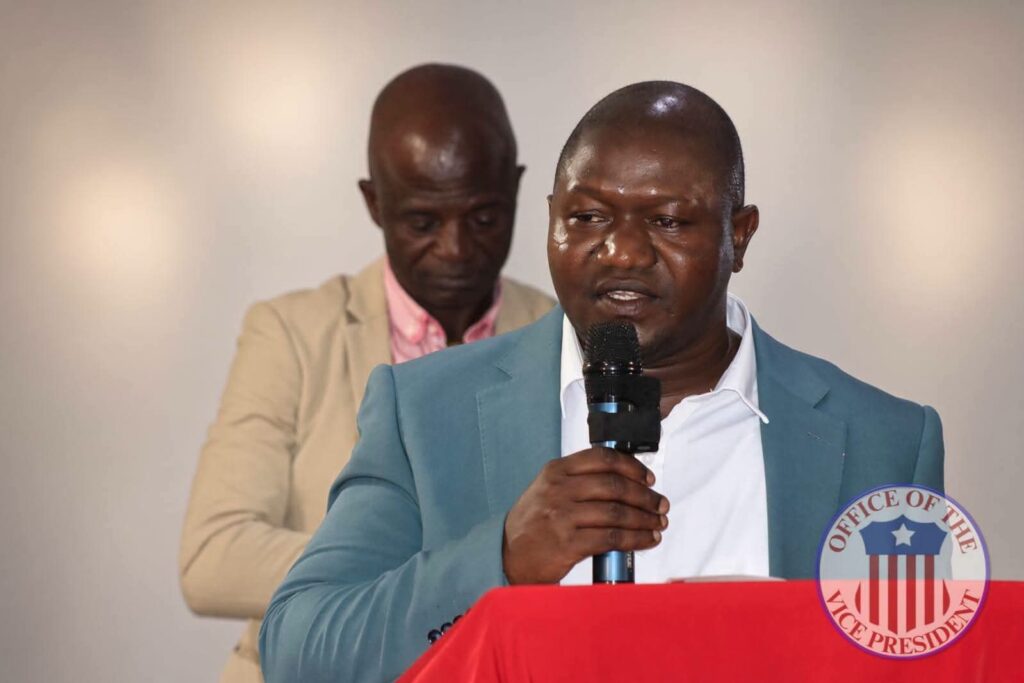
For AITB Director General Abraham Billy, the renovated headquarters represents more than an upgraded physical structure.
Billy said the facility should become a platform for broader reforms aimed at improving the quality, credibility and economic relevance of technical and vocational education and training (TVET) throughout Liberia.
Drawing on his own experience, Billy recounted that he spent several years operating a small business to finance his education after completing secondary school. He subsequently earned a Bachelor’s degree in Economics and Demography from the University of Liberia and later obtained a Master’s degree in Applied Economics through a Government of Liberia and World Bank-supported program.
He said his personal experience reinforced his belief that formal education, while important, must be accompanied by practical abilities and access to economic opportunities if young Liberians are to improve their livelihoods.
Billy said Liberia continues to face a significant gap between the skills available among some graduates and the competencies required by employers.
He cited AITB assessments indicating that 59 percent of instructors are teaching outside their areas of specialization, 43 percent have limited practical experience, and 40 percent have not received professional development.
According to him, addressing those deficiencies will require improvements across the TVET system, including instructor training, curriculum development, equipment, certification, occupational standards and institutional oversight.
He said AITB is pursuing measures to strengthen licensing, quality assurance, competency-based training, occupational standards, trade testing, certification and sector-wide monitoring.
Billy emphasized that the ultimate objective is to ensure that students do not leave training institutions with certificates alone, but with demonstrable skills, practical exposure and qualifications that employers can confidently recognize.
He also urged businesses and private-sector institutions to take a more active role in vocational education by helping shape curricula, providing internship opportunities and creating pathways through which qualified graduates can enter the workforce.
Both officials stressed that the effectiveness of Liberia’s TVET system should ultimately be judged by its impact on young people—particularly whether graduates are able to secure decent employment, establish sustainable enterprises and participate productively in the economy.
The dedication of the renovated AITB facility has consequently renewed attention on technical and vocational education as a key component of Liberia’s efforts to develop a skilled workforce capable of meeting the demands of agriculture, industry, construction, energy and other productive sectors.
