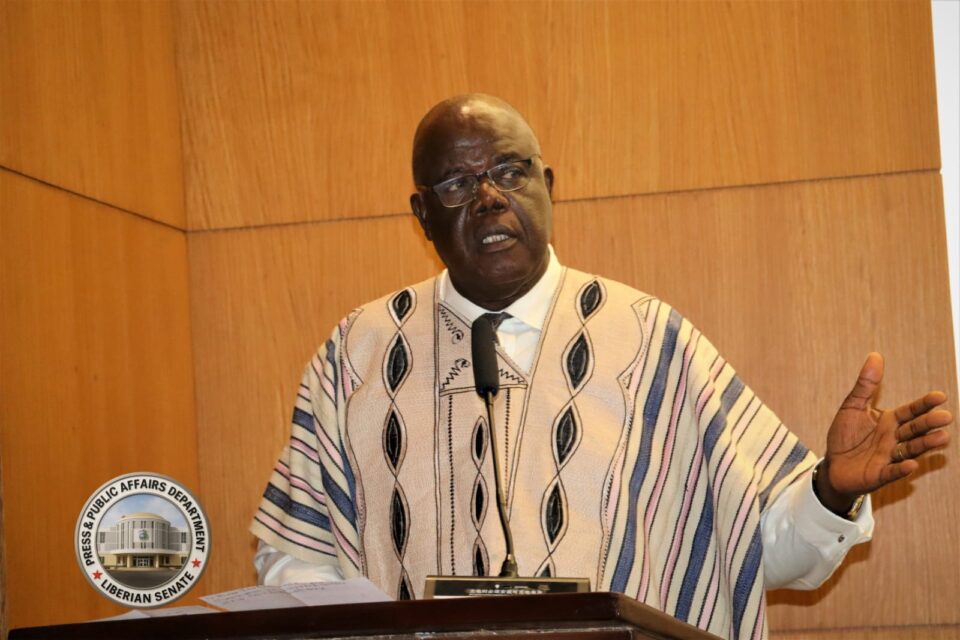
MONROVIA, LIBERIA — Maryland County Senator J. Gbleh-bo Brown has questioned the level of coordination among the Liberia Revenue Authority (LRA), National Port Authority (NPA), and Ministry of Commerce, demanding clarity on institutional responsibilities, information-sharing and the financial consequences of prolonged shipment delays along regional transit routes.
Speaking during a legislative discussion, Senator Brown challenged the Ministry of Commerce’s need for additional budgetary allocation to undertake or understand a task he suggested already falls within the mandate of the LRA.
He questioned the rationale behind allocating public resources to an area where another government institution already has the responsibility, raising concerns about possible duplication of functions, weak inter-agency coordination and the efficient use of public funds.
Brown urged the LRA to explain how it gathers, utilizes and communicates critical information to other government institutions, particularly those responsible for port operations, revenue collection and trade regulation.
He emphasized that effective information-sharing among the agencies is essential, given their interconnected responsibilities in facilitating the movement of goods, regulating trade and ensuring efficient port operations.
The senator’s concerns also focused on whether the LRA, NPA and Ministry of Commerce operate with the same information when making decisions affecting importers, businesses and other stakeholders involved in international trade.
Turning to regional shipment challenges, Brown raised questions about the movement of goods through Abidjan, Côte d’Ivoire, particularly when shipments remain there for several days or weeks before proceeding to their final destinations.
He questioned who assumes financial responsibility for the additional costs arising from such delays, including whether importers, shipping companies or other parties are expected to bear the burden.
The senator sought clarification on the procedures governing these delays and the level of responsibility assigned to the relevant institutions when shipments encounter prolonged disruptions along transit routes.
Although such delays may occur outside Liberia’s borders, their financial consequences can extend to Liberian businesses and importers, potentially increasing the cost of doing business.
Brown’s intervention highlighted the need for the three government institutions to clearly define their respective responsibilities, strengthen institutional cooperation and provide transparent explanations of the procedures governing shipment movement and related expenses.
He called for greater accountability in the management of trade-related activities, questioning whether existing arrangements adequately protect businesses from unnecessary costs arising from administrative gaps and delays.
Brown Questions Inter-Agency Coordination, Challenges Commerce Ministry’s Budget Request Over LRA Mandate