
By Adolphus Singbeh
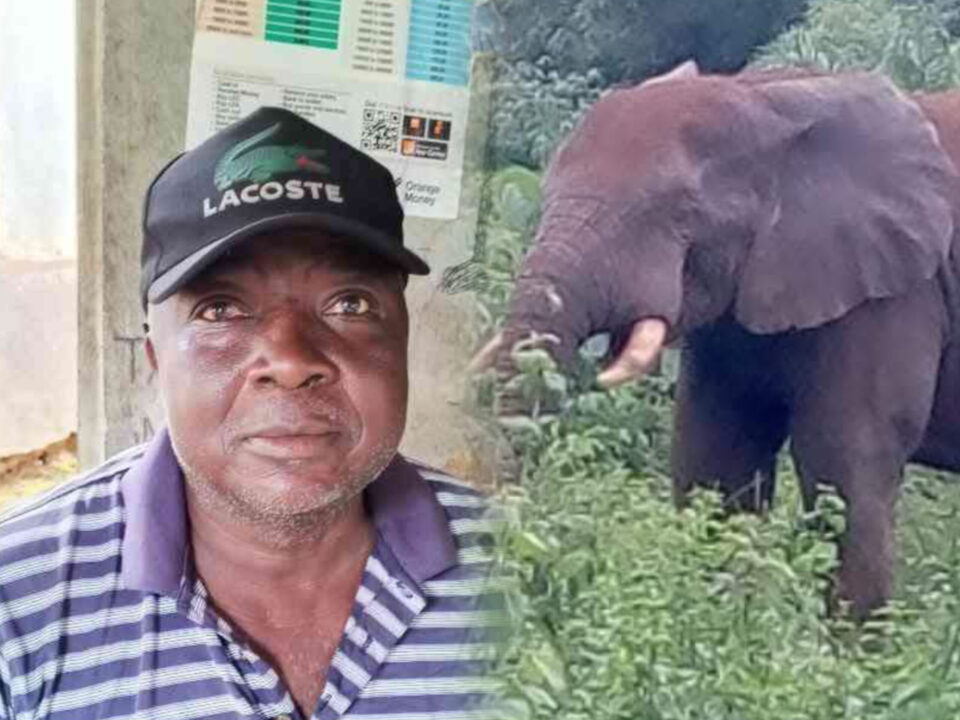
GBARMA DISTRICT, Gbarpolu County — Farmers in Gbarma District are sounding the alarm over what they describe as a growing invasion of elephants that has destroyed farms, threatened livelihoods, and raised fears of a looming food crisis if urgent action is not taken.
According to the Executive Director of Domafeign, Mr. Boimah Coleman, elephants have been raiding farms across the district for the past two years, with the scale of destruction becoming significantly worse in recent months.
Speaking to this reporter, Coleman said the invasion has affected numerous farmers throughout Gbarma District, prompting repeated appeals to the Forestry Development Authority (FDA) for intervention.
He said farmers have implemented nearly all of the preventive measures recommended by the FDA to keep the elephants away from their farms, but the efforts have failed to stop the animals from destroying crops.
Coleman further disclosed that elephants have recently been sighted along the main road frequently used by farmers traveling to and from their farms, heightening concerns over the safety of residents.
He said the animals have destroyed a wide range of crops, including cassava, rice, cabbage, bitter ball, eggplant, and other food crops, leaving many farmers with significant losses.
While emphasizing that farmers have no intention of harming the elephants, Coleman called on the Forestry Development Authority to take immediate action to address the situation before it worsens.
He warned that if the destruction continues over the next two years, many residents could be forced to abandon farming altogether, a situation he said could trigger severe food shortages across the district.
Coleman also alleged that, apart from elephants reportedly killed in Varguaye, Grand Cape Mount County, elephants have killed two residents identified as Pinky and Jah Gbassa in Zuo Town, Gbarma District.
He cautioned that unless swift and effective measures are implemented, the continued destruction of farms could have devastating consequences for food production and household livelihoods in Gbarma District.
