
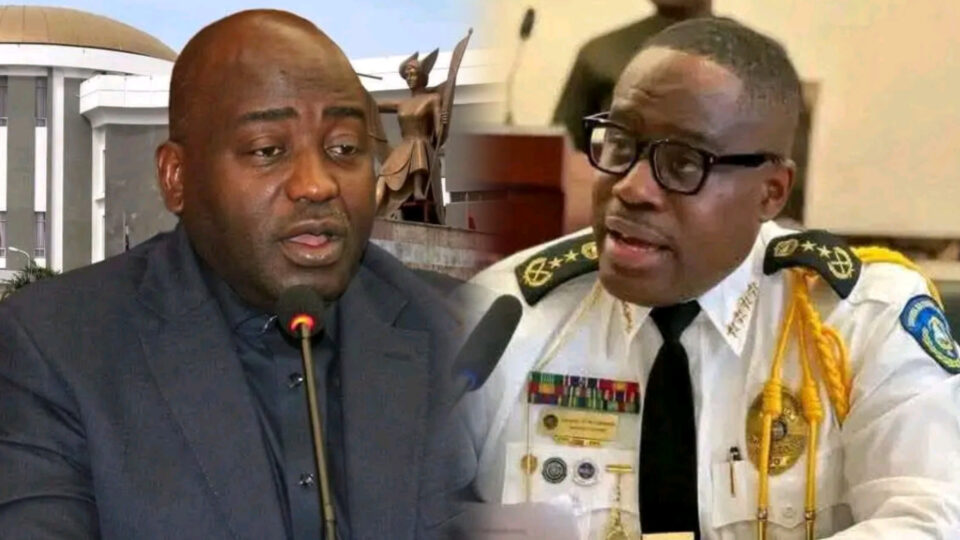
MONROVIA – Citizens Movement for Change (CMC) Political Leader and Nimba County Representative Musa Bility has criticized the Liberia National Police (LNP) over its recent communication to Gbarpolu County Senator Amara Konneh, arguing that the police should focus on investigating Liberia’s high-profile cocaine trafficking case instead of questioning lawmakers who demand accountability.
The controversy follows an August 17, 2026 letter from Inspector General of Police Gregory O.W. Coleman requesting Senator Konneh to provide evidence to support public statements he made about the government’s handling of the cocaine investigation. The letter also cautioned the senator against making further allegations without evidence, prompting debate over the limits of police authority and the constitutional right to free expression.
Senator Konneh had publicly questioned the manner in which the cocaine investigation was being handled, including the suspension of some security officials without public prosecutions and whether senior officials should oversee investigations involving institutions under their own command. He also called for greater transparency and accountability in the handling of the case.
Responding in a public statement, Bility argued that Liberia is governed by the Constitution and not by police directives.
“The police are authorized to investigate crimes, gather evidence, and request the voluntary cooperation of citizens,” Bility said. “However, a police letter is not a subpoena, a summons, an indictment, or a court order.”
According to Bility, the communication sent to Senator Konneh did not identify any criminal offense, contain a judicial order, or establish any legal penalty for declining to provide the requested information. As such, he maintained that it carried no compulsory legal force.
Bility further argued that the police have no constitutional authority to caution an elected official against making further public statements, citing Article 15 of the Constitution, which guarantees freedom of expression and the public’s right to receive information about government affairs.
He also referenced Article 42 of the Constitution, which protects members of the Legislature from arrest, detention, prosecution, or trial for opinions expressed while carrying out their official duties.
According to Bility, if any individual believes Senator Konneh made defamatory statements, the proper avenue for redress is through the courts rather than police intervention.
He stressed that responsibility for investigating the cocaine case rests with law enforcement agencies, prosecution with the Ministry of Justice, and determining guilt with the courts—not with lawmakers who raise questions about the investigation.
Bility also expressed concern over what he described as a growing pattern of actions against government critics. He cited previous controversies involving Senator Edwin Snowe and former House Speaker J. Fonati Koffa, saying such developments create the perception that state institutions are being used to discourage political dissent.
On the narcotics investigation itself, Bility questioned whether a drug trafficking operation allegedly involving cargo worth hundreds of millions of dollars could have operated without assistance from influential individuals. He said many Liberians believe the principal actors behind the operation have yet to be identified.
To restore public confidence, Bility called for a genuinely independent international investigation into the cocaine case, arguing that the security sector cannot effectively investigate itself while maintaining public trust.
He urged the Liberia National Police to concentrate on identifying and prosecuting every individual linked to the narcotics network, regardless of political affiliation or official position.
“The message is simple,” Bility said. “Investigate the drug network. Follow the evidence. Prosecute everyone against whom credible evidence exists. But do not police opinions, intimidate critics, or attempt to silence elected representatives.”
He concluded by emphasizing that no police officer, government official, or citizen is above the law, adding that “police power ends where constitutional rights begin,” and warning that Liberia “must not become a police state.”
