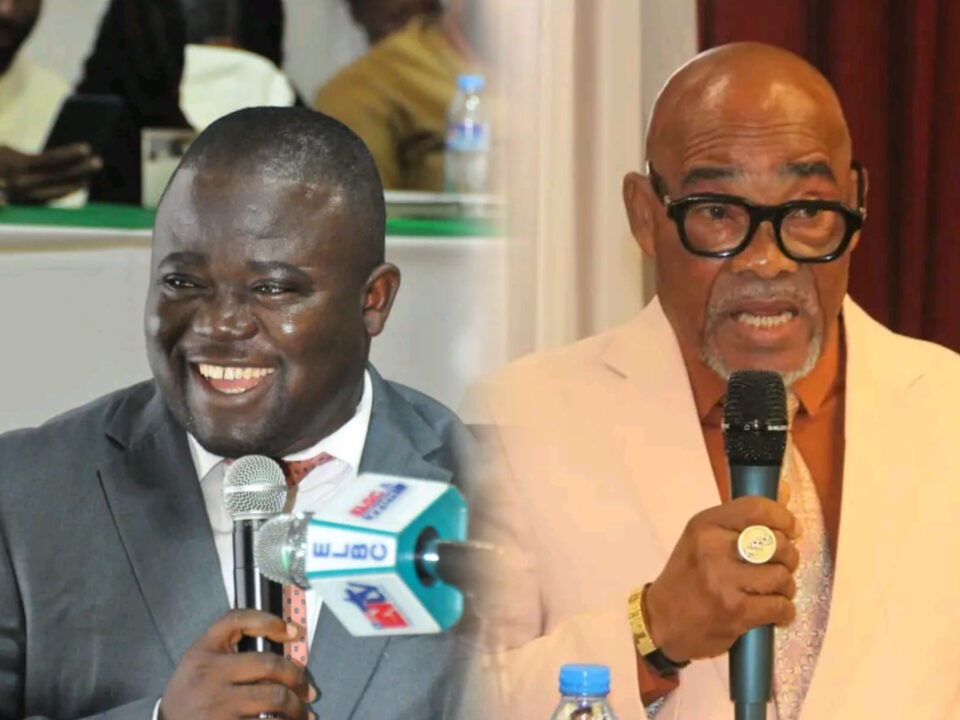
GREENVILLE, Sinoe County — A dispute over the powers of government officials in Sinoe County has escalated into a public legal debate, with former County Superintendent and current District #1 Representative Thomas Romeo Quioh calling for institutional clarification and Atty. Maxwell Grigsby II arguing that Liberia’s laws already clearly define the limits of those powers.
The exchange follows a recent confrontation involving Sinoe County Superintendent Alexander Nah Slewion, County Attorney Cllr. Mmonbeydo Nadine Joah, Labour Commissioner Cleophas Nyantee Mah and other officials.
Quioh said he became involved after receiving information about the confrontation and subsequently spoke separately with both the Superintendent and County Attorney.
After reviewing the applicable legal framework, Quioh said the dispute should not be reduced to a question of who is the “boss” in Sinoe.
He argued that while the County Superintendent is the chief executive of the county government and has broad responsibility for county administration and coordination, national officials stationed in the county remain under their respective ministries and statutory chains of command.
The County Attorney, Quioh said, is an official of the Ministry of Justice and therefore does not report directly to the Superintendent.
“The fundamental problem is not simply who is ‘boss,’” Quioh said. “It is a collision between different chains of governmental authority.”
Quioh also cautioned that the County Attorney’s prosecutorial authority is not unlimited.
While the Superintendent should not interfere with lawful prosecutorial functions, he said, the County Attorney must similarly operate within the law and have a proper legal basis for any enforcement action involving another government official.
“The dividing line is lawful authority — not institutional seniority,” Quioh said.
The debate stems from an incident reportedly triggered by a labour-related complaint involving members of the Fula business community.
According to a report by The Liberian Investigator, the County Attorney sought police assistance in connection with Labour Commissioner Mah, reportedly alleging obstruction of justice. Mah was not arrested.
The disagreement subsequently moved to the Superintendent’s office, where accounts of what happened differ.
Witnesses cited by the publication alleged that the Superintendent ordered the County Attorney to leave the office and that a confrontation followed after she resisted and continued recording the encounter.
The report further alleged that a Superintendent’s aide struck the County Attorney during the ensuing struggle. She was later reportedly taken to F.J. Grant Hospital after fainting at the courthouse.
There have also been conflicting accounts about whether the County Attorney physically struck the Superintendent. A report initially circulated on social media made that allegation, but The Liberian Investigator said video footage it reviewed did not substantiate that version.
Grigsby has taken a different position, arguing that the legal framework does not leave the central issue ambiguous.
“Great prepositions but the law doesn’t seem ambiguous as to who can order an arrest,” Grigsby said in response to Quioh.
He pointed to the statutory responsibilities of the Ministry of Justice, particularly its role in public safety, law enforcement and matters involving government officials accused of violating the law.
For Grigsby, the problem is not a lack of clarity in Liberia’s laws but what he described as officials exceeding their statutory authority.
“There’s absolutely no conflict with the laws but ego to overstep statutory duties and zest to exercise excessive power not vested by the law,” he said.
He concluded: “We still have a long way to go in Sinoe County with governance.”
Quioh has proposed that the Ministries of Local Government, Justice and Labour, together with the Liberia National Police, issue a joint clarification of the respective powers of county and national officials.
He wants the institutions to address who the County Attorney and Labour Commissioner report to, the Superintendent’s authority over national government officials, who may lawfully order the arrest of a government official, when a warrant is required and how disputes between officials from different institutions should be handled.
The disagreement between Quioh and Grigsby has therefore moved the Sinoe incident beyond the immediate confrontation and into a broader debate about Liberia’s governance structure.
At stake is a fundamental question: when officials from different government institutions come into conflict inside a county, which institution has the legal authority to act—and where does that authority end?
Quioh argues that clearer institutional coordination is needed to prevent the Sinoe
Quioh, Grigsby Clash Over Legal Authority After Sinoe Officials’ Confrontation