
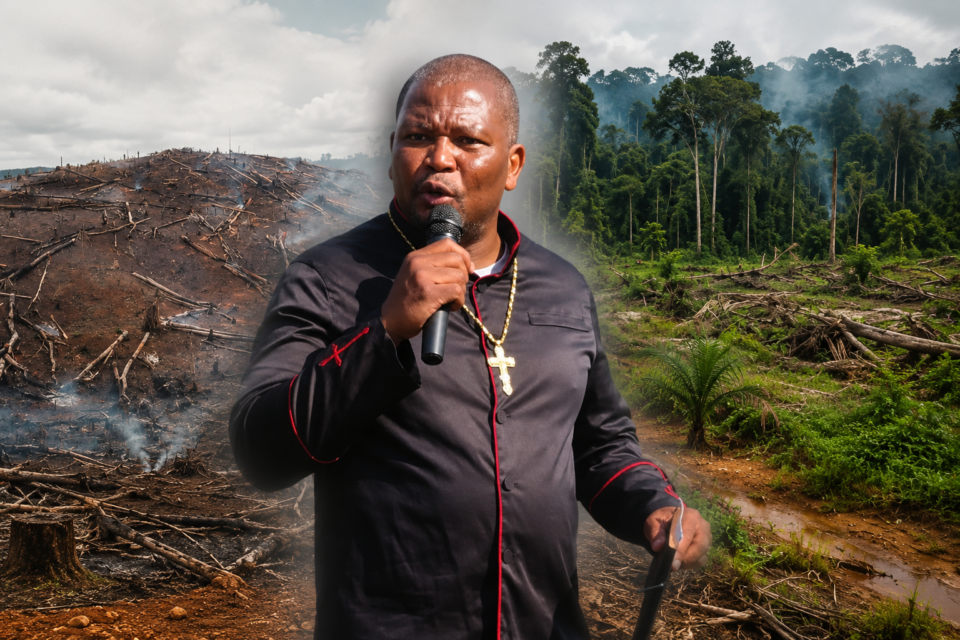
Monrovia, Liberia – Reverend Philip S. Blamo, Chief Executive Officer of the Citizens Action Committee of Liberia (CAC-RL), has sounded a strong warning over the rapid destruction of Liberia’s forests, cautioning that the country could eventually face desert-like conditions if urgent measures are not taken to protect its rainforest ecosystem.
According to Rev. Blamo, Liberia’s southeastern rainforest—recognized as the largest remaining block of tropical rainforest in West Africa—is under severe threat from illegal cocoa farming, unregulated mining operations, and widespread logging activities.
He alleged that the destruction is being driven largely by migrant workers and investors from neighboring countries, including Burkina Faso, Ghana, and Côte d’Ivoire, who have increasingly moved into Liberia’s forest regions in search of fertile land and economic opportunities.
“Liberia is losing its forests at an alarming rate,” Rev. Blamo stated. “If we continue on this path without decisive intervention, future generations may inherit a country stripped of its natural heritage and environmental protection.”
The CAC-RL head noted that thousands of hectares of humid primary forest have reportedly been cleared in recent years, particularly in the southeastern counties. He described the trend as a growing environmental emergency that threatens biodiversity, water resources, agriculture, and the livelihoods of rural communities.
Rev. Blamo pointed specifically to the rapid expansion of cocoa cultivation, commonly referred to as the “cocoa rush,” as a major driver of deforestation. He said the influx of farmers and laborers from neighboring Côte d’Ivoire has intensified pressure on Liberia’s forests, especially in Grand Gedeh County, where significant forest loss has been recorded.
According to him, rising global cocoa prices and limited land availability in neighboring countries have encouraged many farmers to cross into Liberia, where vast forested areas remain relatively accessible.
Beyond cocoa farming, Rev. Blamo expressed concern over illegal logging and unregulated mining activities, which he said continue to degrade forest ecosystems and contribute to environmental instability.
He further lamented what he described as the country’s inadequate reforestation efforts, stressing that the restoration of degraded lands through tree planting and forest regeneration remains critical to reversing current trends.
“Liberia is slowly exhausting its natural resources without replacing them,” he warned. “Reforestation is no longer an option; it is a necessity if we are to preserve our environment and protect future generations.”
Rev. Blamo is calling on the Government of Liberia, environmental agencies, local communities, and international partners to strengthen forest protection measures, enforce environmental regulations, and invest in sustainable land-use practices.
Environmental experts have long regarded Liberia’s Upper Guinean Forest ecosystem as one of the most important biodiversity hotspots in Africa, providing habitat for endangered wildlife while playing a crucial role in climate regulation and carbon storage.
As concerns over climate change and environmental degradation continue to grow, Rev. Blamo emphasized that safeguarding Liberia’s forests is not only a national responsibility but also a regional and global imperative.
“We must act now,” he said. “The future of Liberia’s forests—and the future of our country—depends on the decisions we make today.”
