
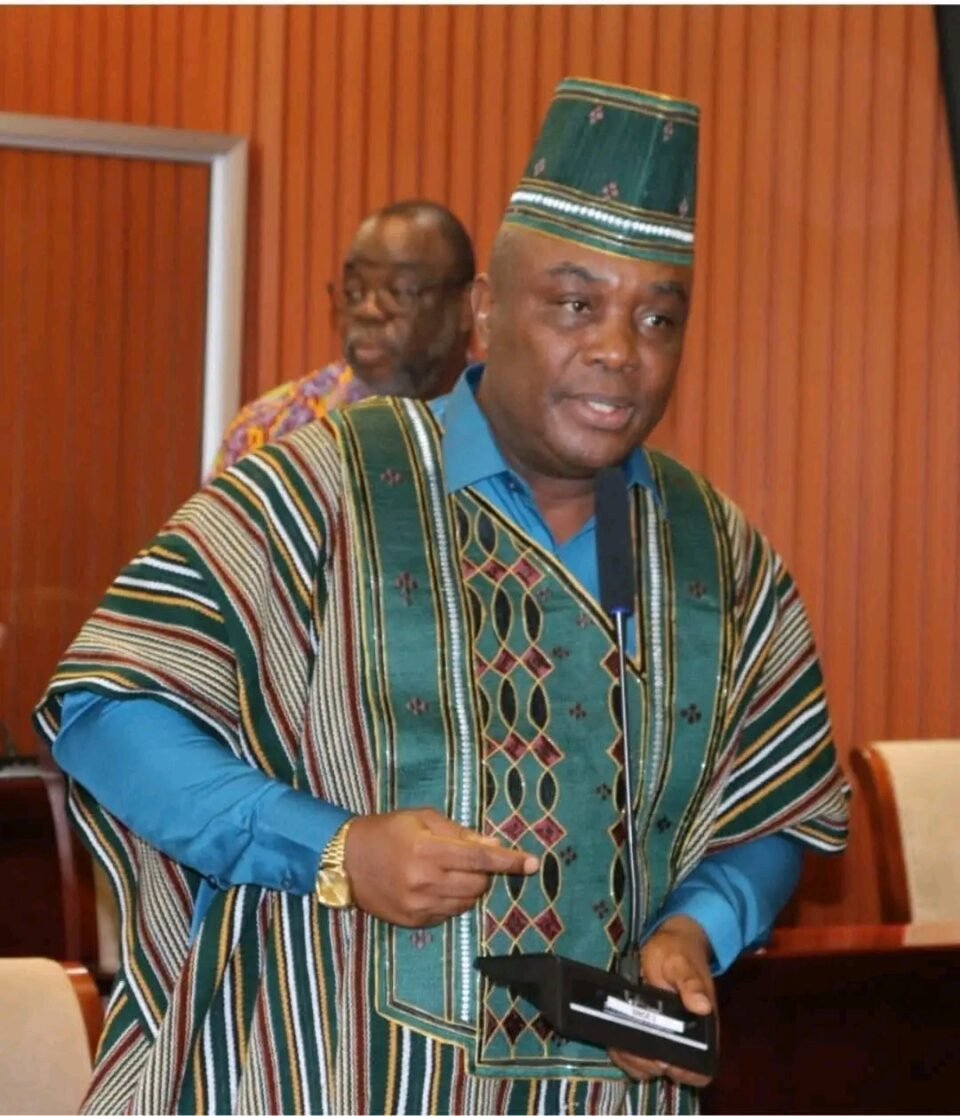
MONROVIA, Liberia — Sinoe County Senator and Political Leader of the People’s Economic Movement (PEM), Crayton Oldman Duncan, has called for a major shift in Liberia’s agricultural policy, arguing that the country must reduce its reliance on imported rice and invest more aggressively in domestic food production.
Senator Duncan made the call during a live interview on Truth FM 96.1 with journalist O’niel Roberts, where he discussed Liberia’s rice consumption, the economic consequences of food imports, and the country’s capacity to produce enough rice to feed its population.
He questioned why Liberia, despite its considerable agricultural land, fertile soil, water resources, and available human capital, continues to depend heavily on foreign suppliers for its most important staple food.
According to Duncan, the country’s continued dependence on imported rice is not simply a food supply concern but a broader economic challenge with implications for national development, employment, farmers’ livelihoods, and economic independence.
He argued that Liberia must reconsider the amount of money spent annually on importing rice while local agricultural production remains below the country’s potential.
Imported Rice Raises Questions About Liberia’s Economic Priorities
Duncan’s remarks have brought renewed attention to the economic implications of Liberia’s dependence on foreign rice supplies.
The continuous demand for imported rice means that significant financial resources are spent purchasing food from overseas, while local farmers face the challenge of limited investment, inadequate infrastructure, and insufficient support to expand production.
The PEM leader believes that rice importation should no longer be treated as an unavoidable reality of the Liberian economy.
Instead, he wants domestic rice production elevated to a national economic priority, saying stronger local production could improve food security, create employment, stimulate rural businesses, and keep more money circulating within the country.
The senator maintains that Liberia cannot achieve meaningful agricultural transformation without practical investments and a coordinated national strategy.
He identified access to modern farming equipment, improved seeds, affordable agricultural inputs, irrigation systems, rice-processing facilities, storage capacity, transportation infrastructure, and financing as essential components of a successful agricultural development programme.
He also emphasized the importance of creating dependable markets where local farmers can sell their produce at reasonable prices.
Such measures, according to the PEM political leader, would encourage farmers to increase production, improve their incomes, and make agriculture a more attractive source of employment, particularly for young people.
He further called for stronger cooperation among government institutions, private businesses, financial institutions, development partners, and farming communities to address the challenges confronting the sector.
Duncan’s position reflects the People’s Economic Movement’s broader political philosophy, which emphasizes economic empowerment, poverty reduction, local ownership of economic opportunities, and the productive use of Liberia’s natural resources.
The movement argues that national economic independence must be measured not only by political commitments but also by the country’s ability to produce, process, and distribute essential goods for its population.
For PEM, agriculture should serve as a foundation for employment creation, rural development, poverty reduction, and improved living conditions.
The movement believes that Liberia’s natural resources and agricultural potential must translate into practical economic benefits for ordinary citizens rather than remain largely untapped.
Duncan’s intervention adds to the growing debate over Liberia’s food security and the need to strengthen local agricultural production.
His position places renewed emphasis on whether the country can move beyond its longstanding dependence on imported staple foods and develop a more sustainable domestic agricultural sector.
The PEM leader believes that Liberia’s development ambitions will remain constrained if the country continues to rely heavily on foreign producers for basic food supplies that could be cultivated locally.
He is therefore advocating a development approach that places Liberian farmers, agricultural businesses, and domestic production at the center of national economic planning.
The central message of his argument is that Liberia must transition from being predominantly a consumer of imported food to becoming a stronger producer capable of meeting a greater share of its own needs.
