
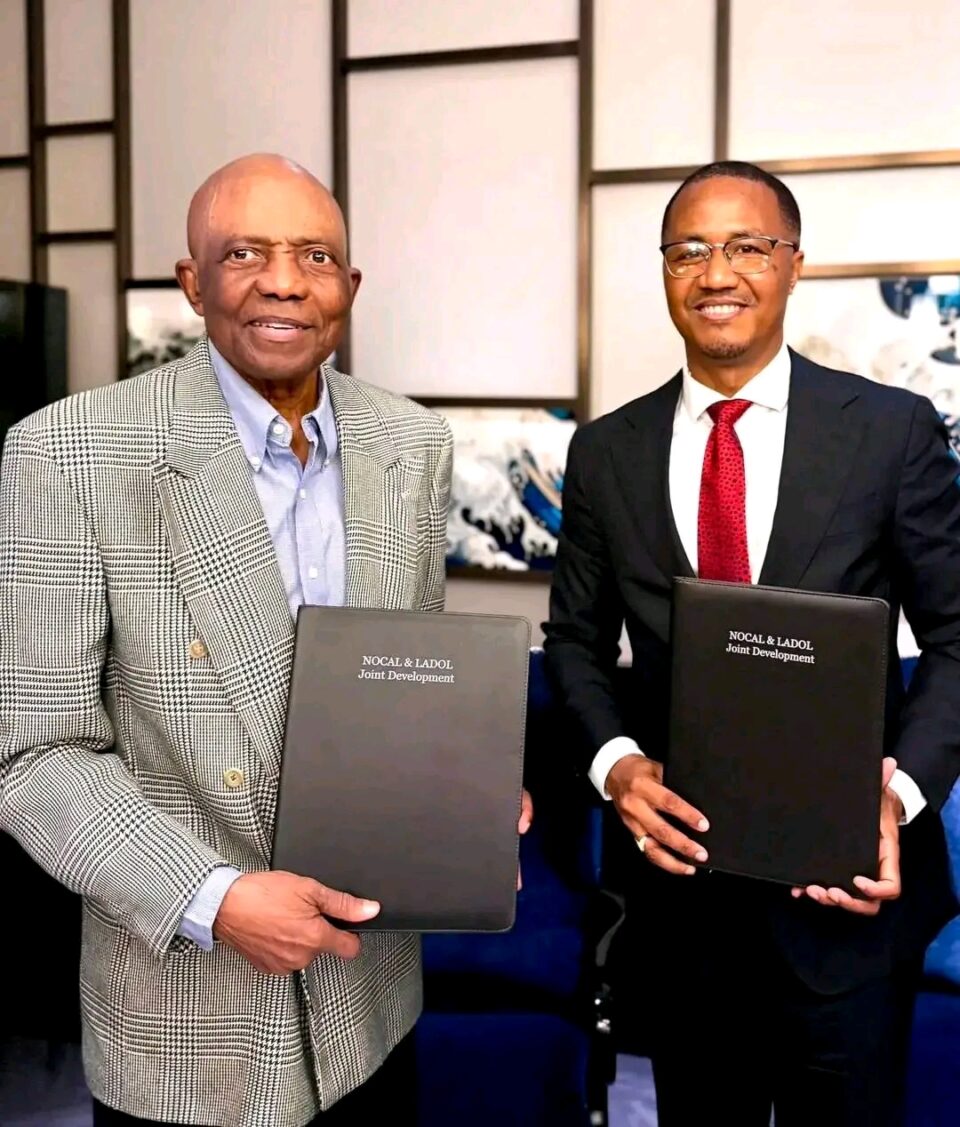
MONROVIA, Liberia — Liberia is moving to keep more of its oil and gas industry inside the country after the National Oil Company of Liberia (NOCAL) signed a deal with Nigeria’s Lagos Deep Offshore Logistics Base (LADOL) to develop a major petroleum logistics hub in Buchanan, Grand Bassa County.
The Joint Development Agreement, signed in London on Sunday, is aimed at ending Liberia’s reliance on neighboring countries for critical services during offshore drilling campaigns and ensuring that more jobs, contracts and economic activity generated by the petroleum sector remain in Liberia.
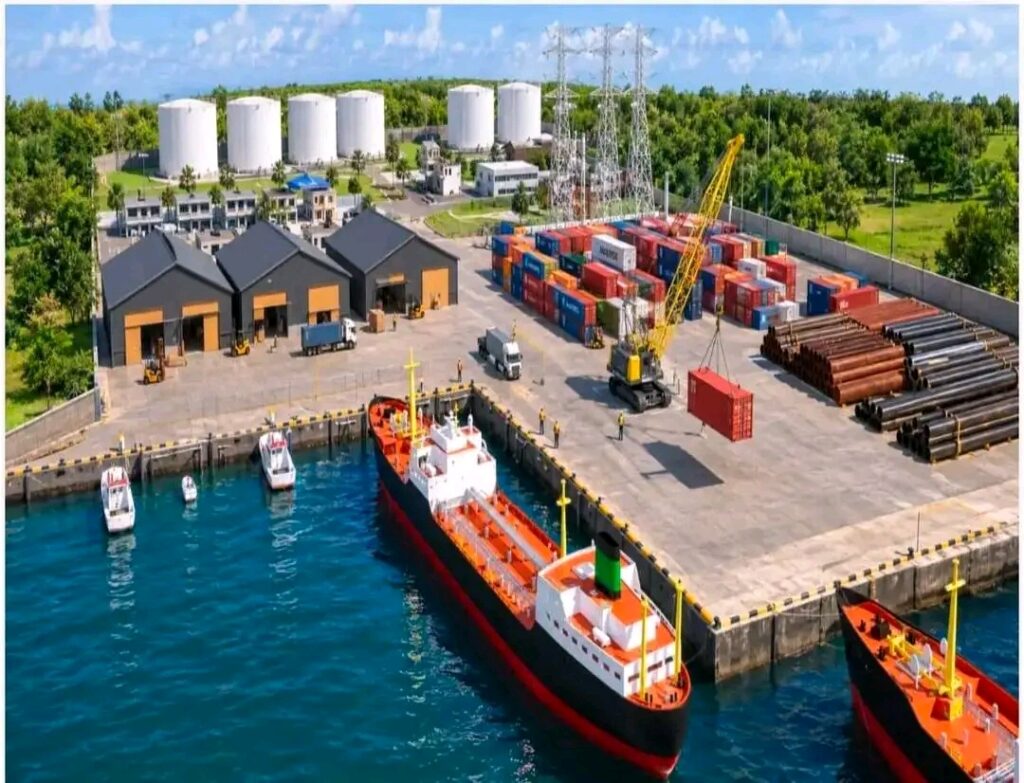
The proposed Buchanan Shorebase will provide logistics and other support services to international oil companies operating in Liberia’s offshore sector.
NOCAL said Liberia’s previous drilling campaign exposed a major weakness in the country’s petroleum infrastructure. Essential services, including waste disposal, logistics, supply-chain management and specialized technical support, were sourced from Côte d’Ivoire, Ghana, Senegal and other countries.
That arrangement allowed neighboring economies to capture jobs and business opportunities that NOCAL now wants to retain domestically.
“We are determined to correct that narrative as we prepare for our next set of drilling programs,” NOCAL President and CEO Fabian M. Lai said.
“This partnership with LADOL is about more than just building a logistic hub for Liberia. It is about anchoring the value chain of our petroleum sector firmly in Liberian soil,” he said.
Lai said the project is intended to ensure that Liberian companies and workers benefit from the expansion of the petroleum industry through jobs, contracts, training and supporting services.
“In other words, I’m simply saying that Liberians’ jobs are finally coming home,” he said.
Six-month feasibility study
Under the agreement, LADOL will serve as NOCAL’s technical lead partner and work with the Liberian oil company on the feasibility study, engineering design, construction and eventual operation of the shorebase.
The feasibility study is expected to begin within 45 days and take six months.
It will assess the land required for the facility, waterfront and marine access, utilities, commercial and operational viability, geotechnical and topographical conditions and the scope of an Environmental and Social Impact Assessment.
The project comes as Liberia anticipates increased drilling activity under petroleum agreements already signed by the government, with additional agreements expected in the future.
NOCAL said the proposed infrastructure is intended to meet the growing logistical requirements of international oil companies as exploration and drilling activities expand.
LADOL brings Nigerian experience
LADOL Executive Chairman Sir Oladipo Ladi Jadesimi said the agreement reflects the company’s confidence in Liberia’s petroleum potential and its commitment to developing local capacity in West Africa.
“We are not just investors; we are partners in building a sustainable future for Liberia’s oil and gas industry,” Jadesimi said.
He said the Buchanan facility could help place Liberian businesses and workers at the center of economic opportunities created by the country’s natural resources.
LADOL, established in 2000, operates a major offshore logistics and industrial facility in Lagos, Nigeria, supporting oil and gas operations and related engineering activities.
Under the new agreement, NOCAL and LADOL will jointly oversee the development and operation of the Buchanan facility, with LADOL providing technical expertise and operational experience.
The agreement also establishes a Joint Steering Committee to oversee the project and requires both parties to negotiate definitive agreements for the development and operation of the facility.
It further contains confidentiality and non-circumvention provisions designed to protect the partnership.
For Liberia, the project represents an attempt to address one of the longstanding challenges of its emerging petroleum industry: how to ensure that the economic benefits of oil exploration are captured locally rather than flowing to neighboring countries.
